Artistic approach
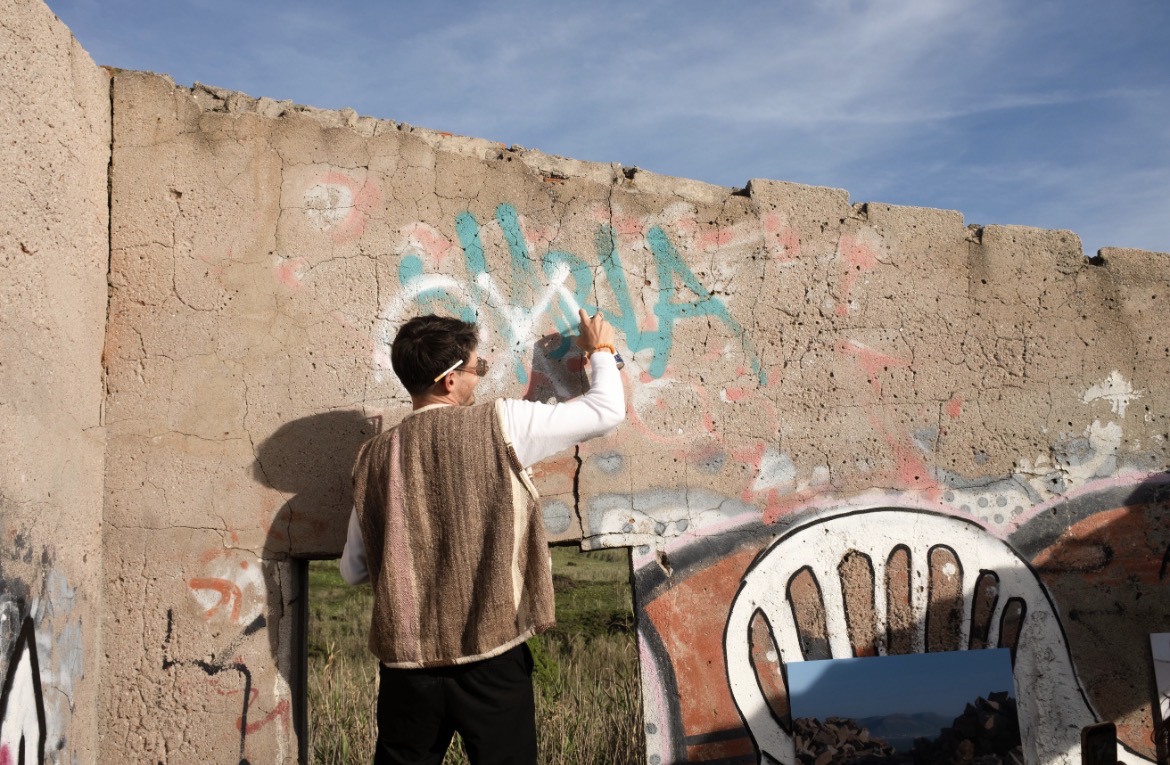
Born in 1992 in Roubaix, in northern France, I grew up in an environment where a person’s worth is measured more by what they do than by what they say.
I grew up in a broken family, without ever really developing a sense of belonging to any group. So very early on, I naturally kept my distance from the structures and principles that are supposed to organise our lives.
Despite that, by thirty I had built what is expected of someone who has “made a success of their life”: a social standing, companies, assets.
Everything we’re taught to want, I had it.
So I stopped everything. I let go of my bearings.
I chose to sell everything, to stop doing, in order to discover what would be left of me once there was no role left to play.
Without status, without assets, without the outward signs that defined me, what would be left of Cyril?
It was in that empty space that creation took on an essential place. Not as a definitive answer, but as a way of exploring what connects us to ourselves, to others and to the world.
My practice revolves around a particular attention to what is felt before it is seen. I don’t plan my works in advance: they emerge from an intuition, a sensation, an encounter or a detail that catches my attention.
Photography, sound creation, visual arts, writing: I explore different mediums without favouring one on principle. The subject determines the form, never the other way around.
The visible is not enough.
Everything can be seen.
But do seeing and looking imply the same thing?
I’ve always felt I perceive the world with a different calibration. Colours I don’t distinguish like others do, because of my colour blindness. Emotions I sense before they find their words. Details that, for no apparent reason, hold my attention.
It is neither a method I devised, nor an artistic stance I chose. These are the cards life dealt me. My way of being in the world.
In my work, I start from a place, a situation, a word, a sensation, a memory, an emotion, a question, a gesture, a sound, a culture or a language. I linger there. I observe what escapes me as much as what imposes itself on me. Then I transform this perception into material.
The point is not simply to show what I have seen, but to give form to what, until then, remained diffuse, silent or hard to name.
To make perceptible something that others perhaps already felt, without yet having taken the time to look at it.
I capture the subtle. I transform it into material. I give it a form so that it can be felt in turn.