Grown-ups doesn't only kill children.
It kills the one who lives inside each of us. Curiosity has been replaced by certainty, play by performance, wonder by calculation, spontaneity by control. The tragedy of grown-ups is not having grown up, but having believed one had to stop being a child. Maybe the world doesn't need more adults. Maybe it simply needs fewer forgotten children.
In August 2026, back from Peru, I install GROWN-UPS in an abandoned house where I had already shown OXYGEN a few months earlier.
I know I’m leaving for Asia the very next month. I decide to leave the installation in place, without trying to control what it will become.
The building could be demolished. The photographs stolen, damaged, torn down. Or simply stay there.
I wanted to take the approach all the way: to let the “world of grown-ups” do whatever it wished with my work.
The return
In early October, back from Asia, I walk past the house again. From afar, something catches my attention. The windows seem to have been sealed up with the photographs from the exhibition.
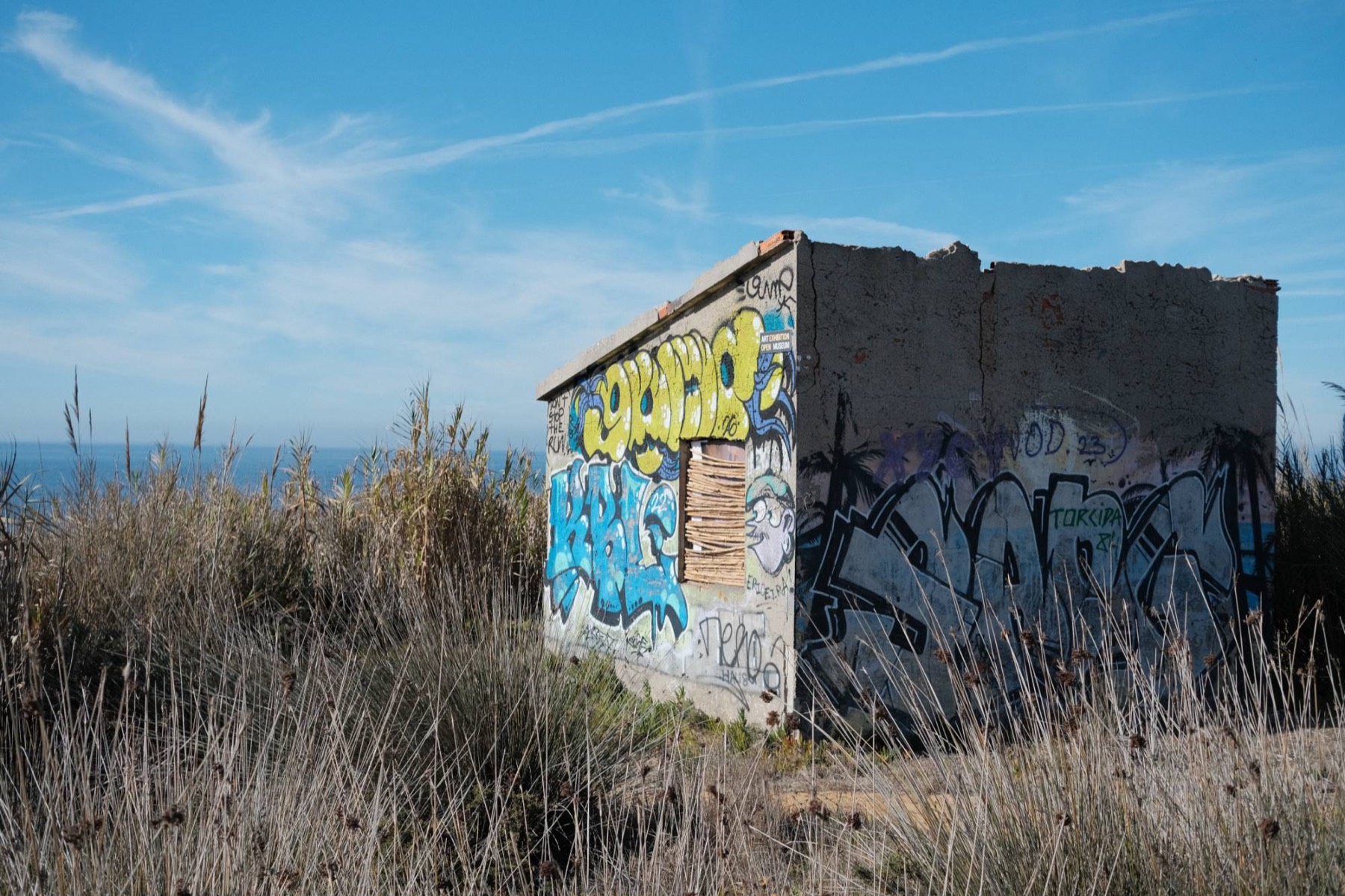
I look inside. Someone is there.
A man has settled into the house. He now lives there, sheltered, behind the images of GROWN-UPS.
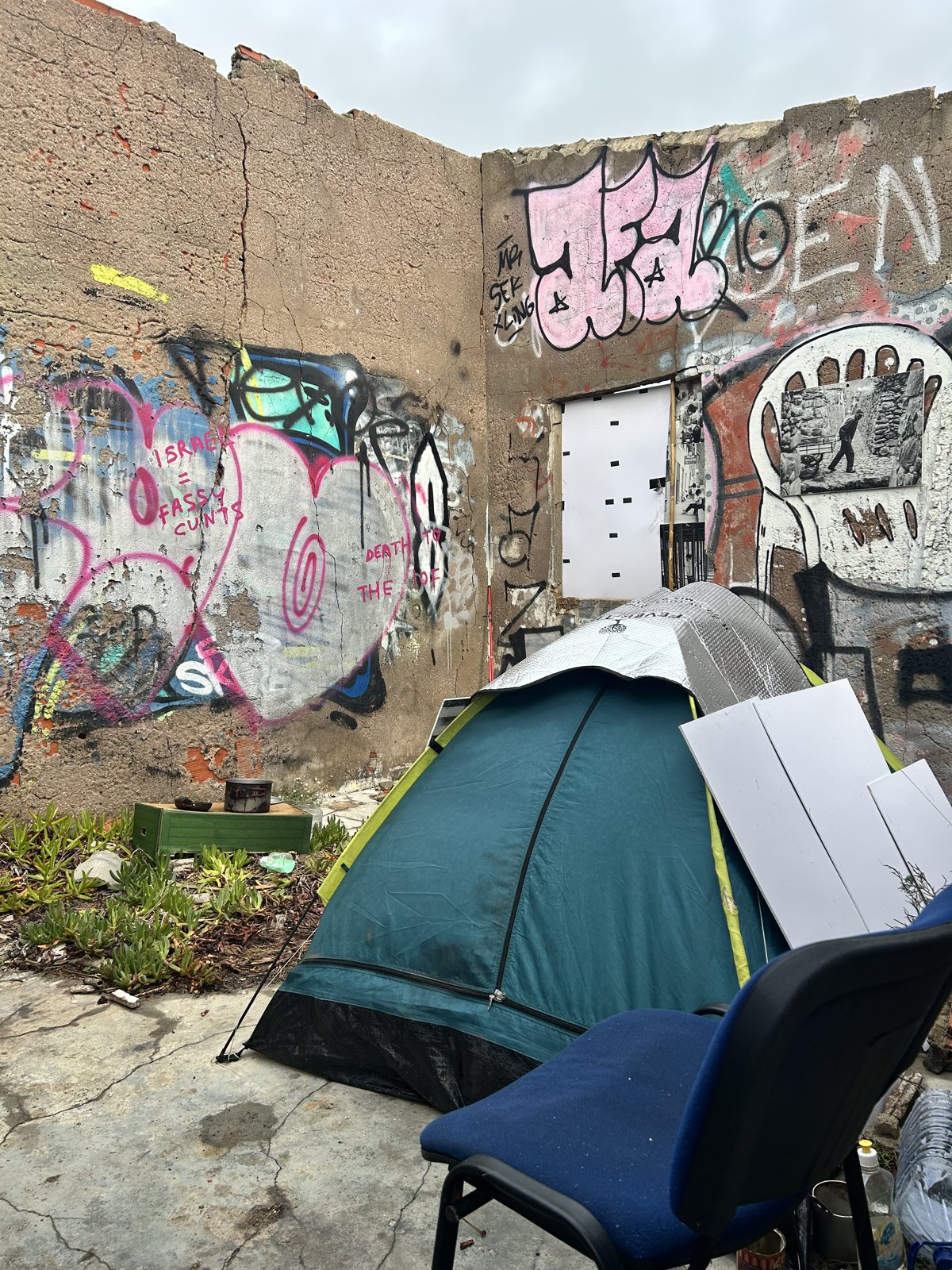
I stay a while watching the scene, without daring to go in. I turn back. I have to admit the situation surprises me: an exhibition that questioned our relationship to the world of adults and to the inner child had just found, without my having planned it, a very concrete function. The photographs of the children were protecting an adult in difficulty.
Petter
Two or three days later, I decide to come back. This time, I go to meet this man.
His name is Petter. He is Portuguese and has travelled a great deal. I explain that I’m the artist who installed the photographs in the house. His first reaction makes me smile: he almost seems to justify himself, pointing out that it wasn’t him who took the images down and that they were already on the floor. He probably thinks I’ve come to reproach him for something.
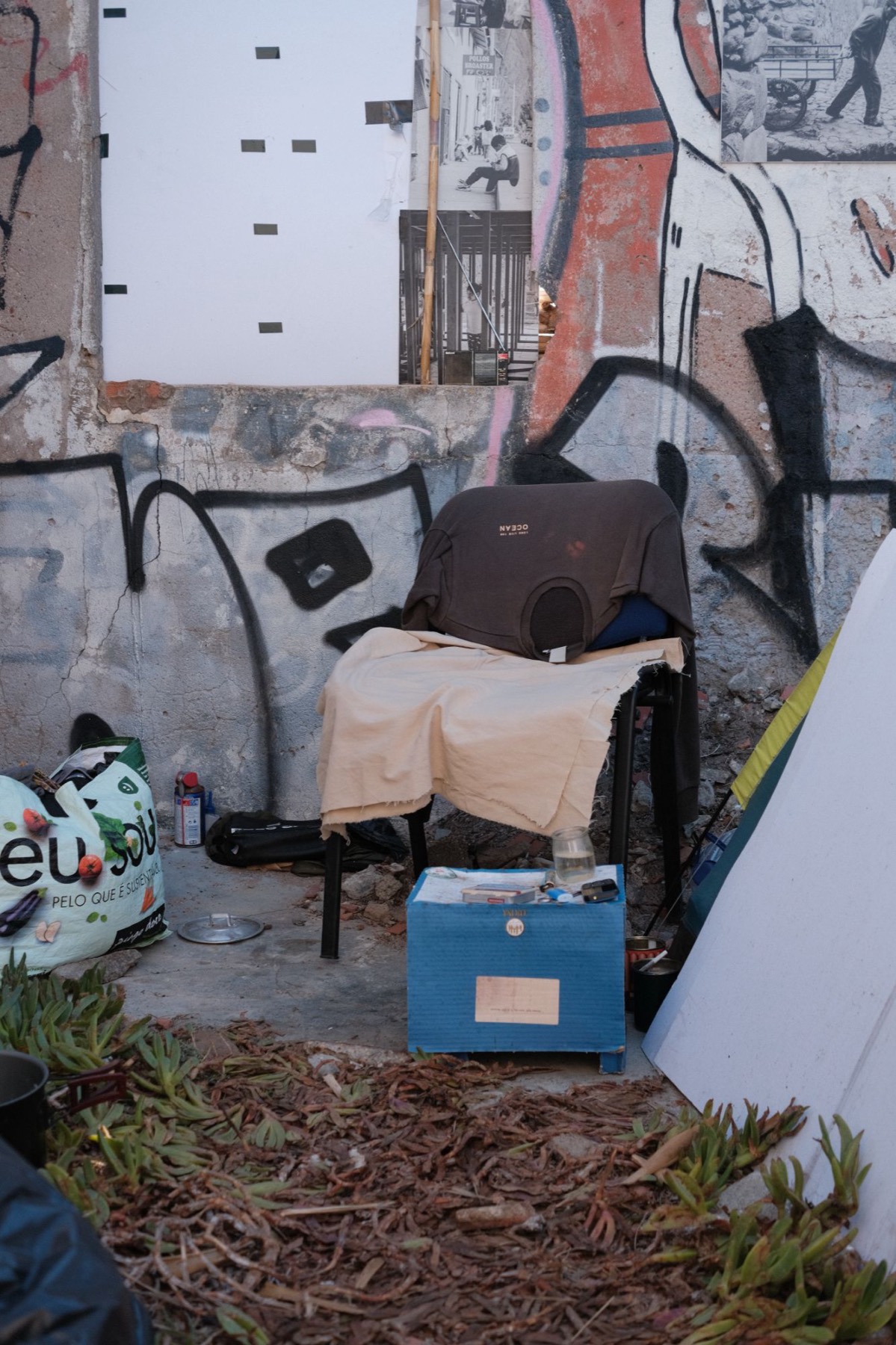
I explain that I simply wanted to get to know him, to know if everything was all right and whether he’d had the chance to look at the exhibition.
The conversation gets going. We talk easily in English and, as we exchange, we discover a few pieces of each other’s stories.
He tells me, in particular, that his former wife, from whom he has been divorced for twelve years, was an artist. She made black-and-white photographs and video documentaries, and she came from Canada. Having myself lived several years there, I find the coincidence rather amusing.
An encounter
Since that first meeting, I stop by to see him every three or four days, when I walk Siva.
I bought him a phone so he could communicate, brought a few groceries and gave a little money now and then. I also gave him a fishing rod. He likes to fish, and it’s a pleasure I share with him. Fishing was, in fact, my first form of meditation.
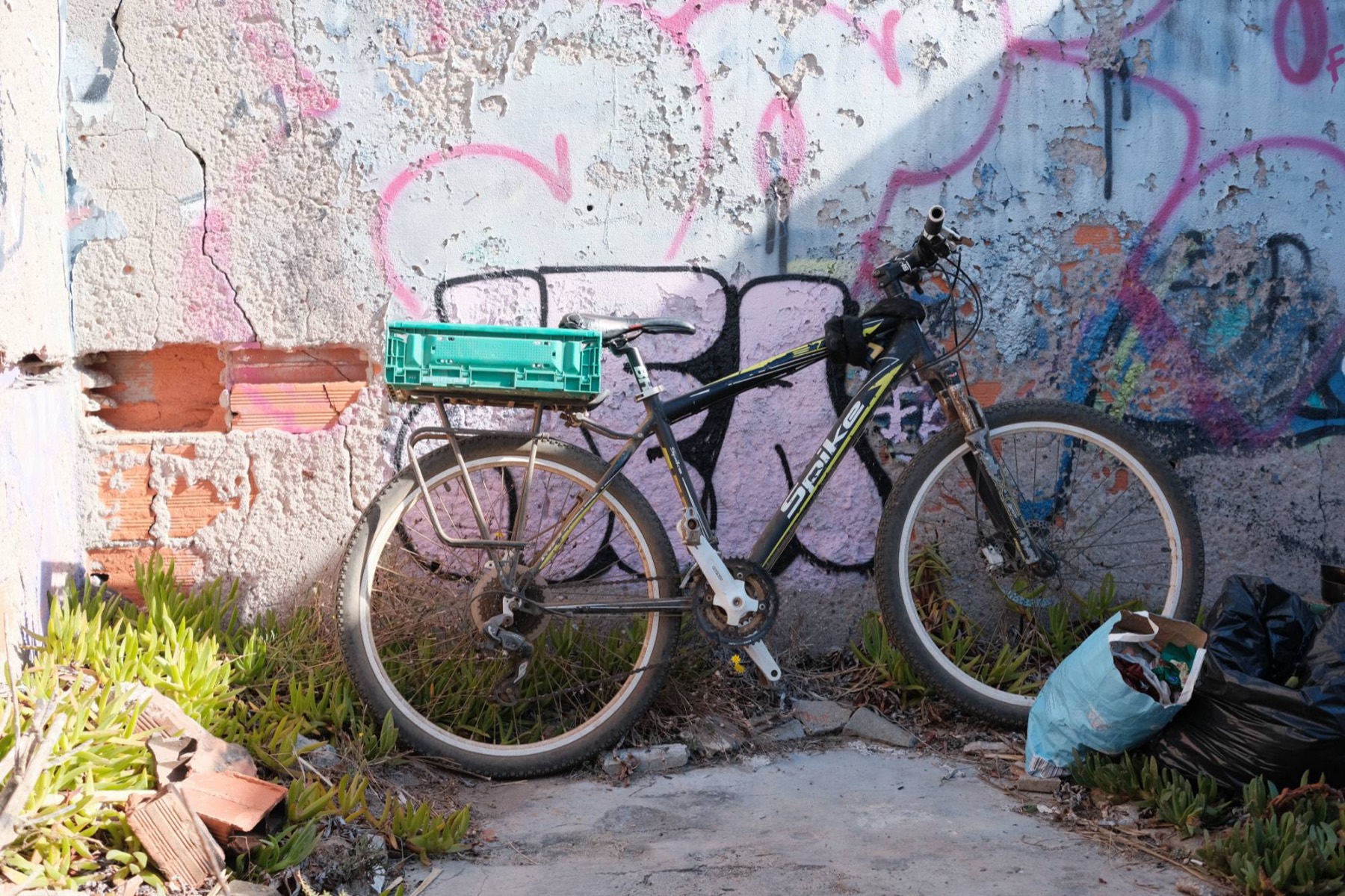
These are simple gestures, in keeping with what I can do. I’m not trying to take charge of his situation or to decide what would be good for him. Petter knows his reality and keeps his own choices.
Over the weeks, a bond has formed. In early November, a prospect begins to take shape: Petter should soon be able to redo his identity papers and would have a chance to find work again in construction, in the area, once his administrative steps are done.
Other people are helping him too. Petter, for his part, is taking the necessary steps himself. What comes next is up to him.
When the exhibition takes on another function
Looking back, what strikes me in this story is the materialisation of GROWN-UPS in the physical world.
The exhibition had been conceived to question what we leave behind as we grow up: curiosity, spontaneity, the freedom to explore and that part of us the world of adults sometimes ends up setting aside.
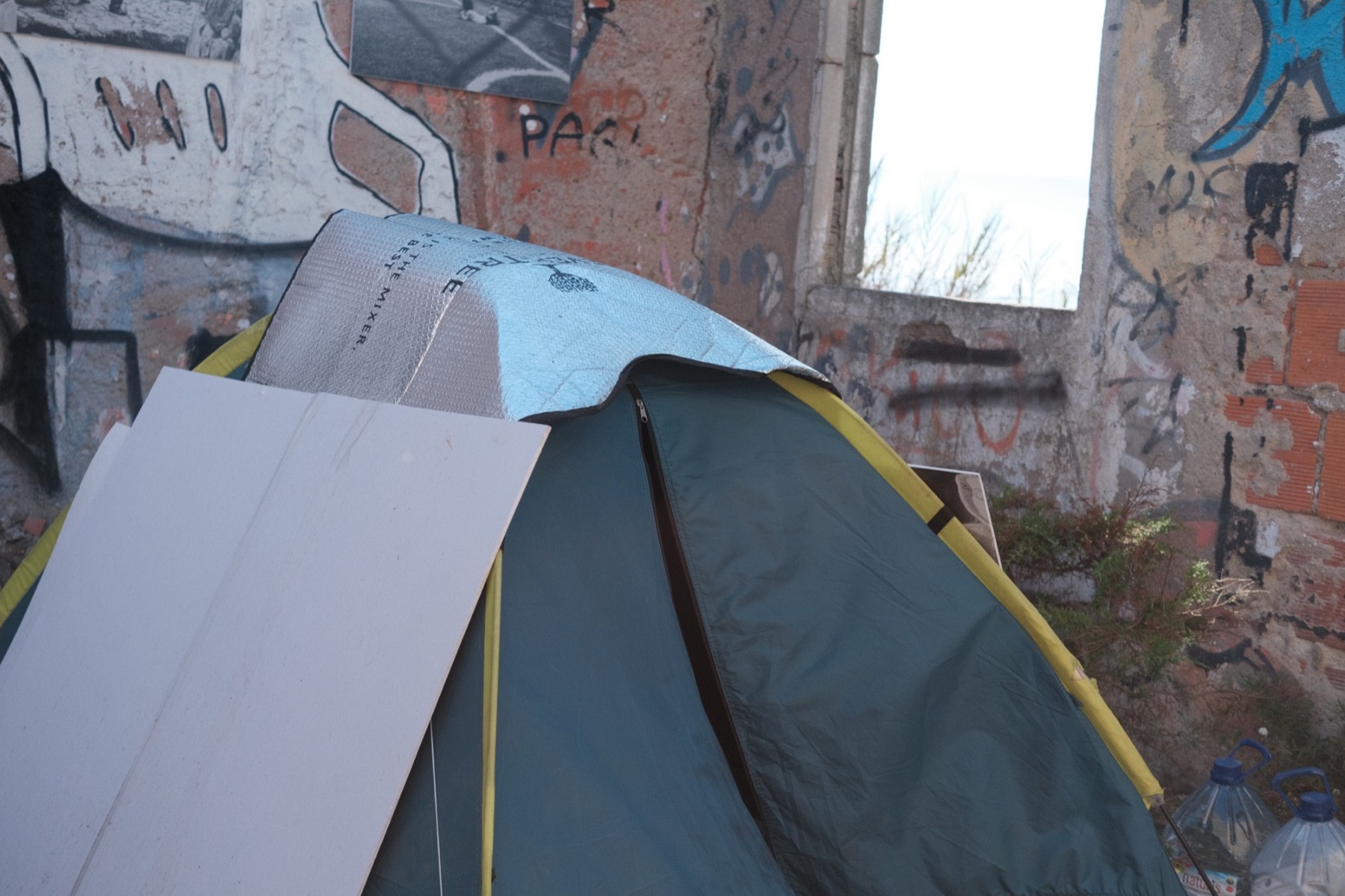
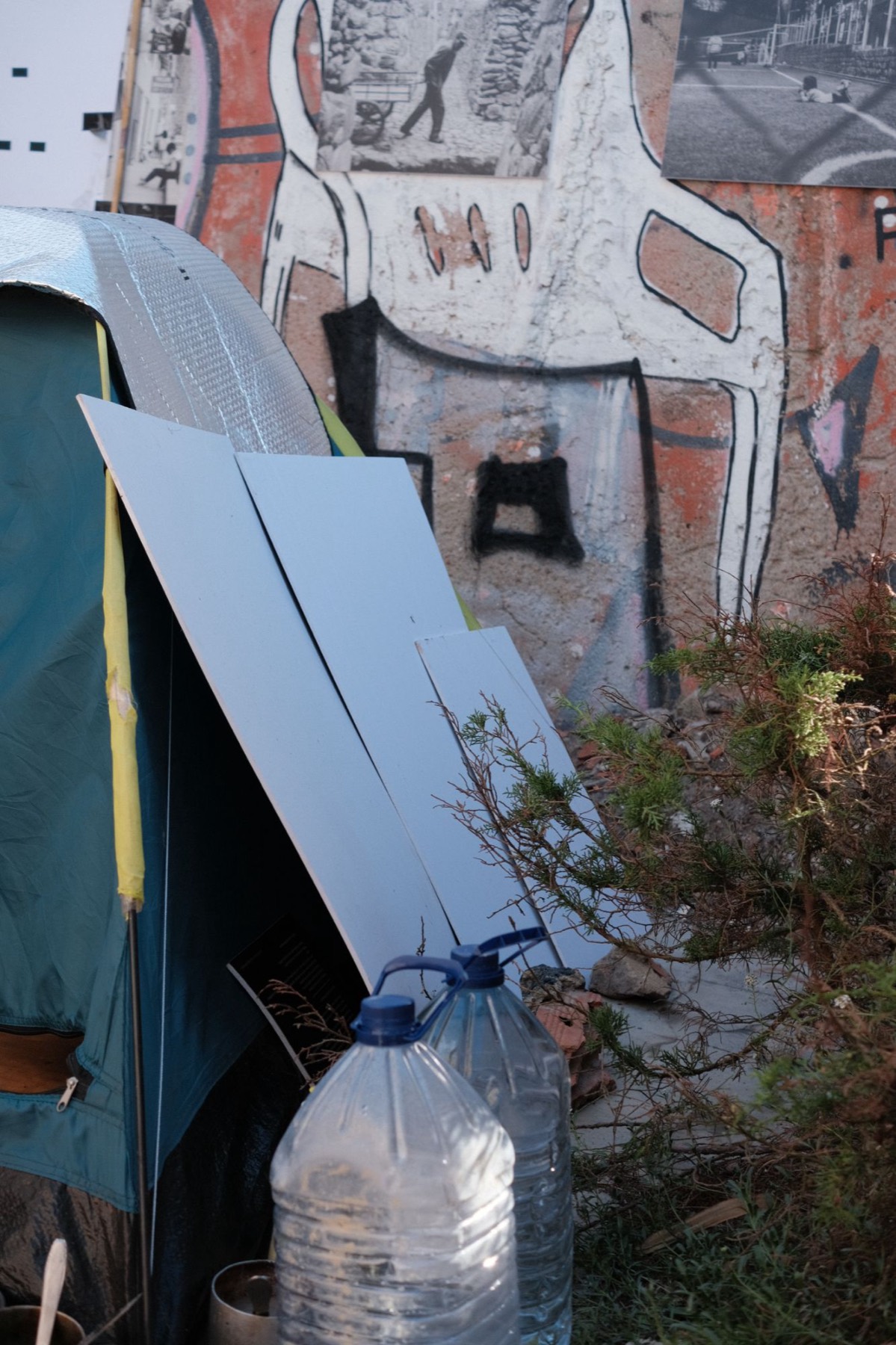
A few weeks after it was installed, the photographs are no longer just works to look at. They have become protection against the cold and the rain for an adult who needed it.
It isn’t about drawing a moral, nor about claiming that a work must have a concrete use to have meaning. But this encounter gives the project an unexpected sequel, one that goes far beyond its original intention.
GROWN-UPS had been conceived as a temporary exhibition. By leaving it in place, I let it escape its original frame. It found another place, beside someone who had not come to see it.
This work has become more than its message. It embodies it.